• Welders
    • MIG Welders
    • TIG Welders
    • Plasma Cutters
  • Welding Safety
    • Welding Gloves
    • Welding Jackets
  • Brands
    • 3M Speedglas
    • Antra
    • ArcOne
    • ArcPro
    • Forney
    • Hobart
    • Jackson
    • Lincoln Electric
    • Miller
    • Optrel
    • Rhino
  • Tips And Tricks
    • Education
    • Underwater Welding

Best Auto Darkening Welding Helmets Guide 2019

Best Auto Darkening Welding Helmets Guide 2019

Best Cheap Portable TIG Welder Reviews For the Money

Introduction about TIG Welder

Contents

  • 1 Introduction about TIG Welder
  • 2 Why do you need my TIG Welder reviews ?
  • 3 Factors to consider when choosing best TIG welder
    • 3.1 Common F.A.Q before you buy a TIG welder
      • 3.1.1 1. Is TIG welding the best option for your job ?
      • 3.1.2 2. What level of quality you need for the welding processes ?
      • 3.1.3 3. What type of metal you are dealing with ?
      • 3.1.4 4. Do you need basic or complex machine to complete welding requirements ?
      • 3.1.5 5. Do you need to use AC/DC power ?
      • 3.1.6 6. Do you need to use portable welding ?
      • 3.1.7 7. Why is welding power source duty cycle important ?
      • 3.1.8 8. Identity when the high frequency, scratch start and other method of starting the arc is used ?
      • 3.1.9 Conclusion

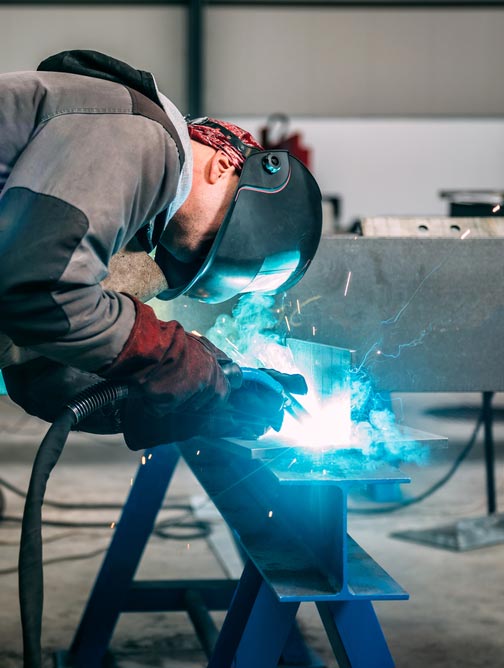
TIG welding is a welding method that is highly employed in the welding of thin metals such cosmetic applications that require strictness in the control of heat. With progress in technology, the method is becoming more and more popular and is being applied in a number of exotic welding applications.

Why do you need my TIG Welder reviews ?

An appropriate TIG welder can offer you excessively precise and clean welds, with minimal smoke emissions and without any spatter. As a result, it is a very attractive welder for cosmetic applications such as automotive, sculpture together with experimental aircraft among others. It is a popular tool in the applications that involve lighter metals such as aluminum, copper alloys, thin-gauge metal parts and chrome-molybdenum tubing. Such materials require precise heat control so as to evade burning off or warping through the bottom of your piece of work. These welding machines do operate efficiently at lower amperages, which are required for any given piece of work.

Factors to consider when choosing best TIG welder

It can be either difficult or easy to choose the best TIG welder. If you don’t know the features of the best machine, and you don’t know the procedures to be followed in selecting these tools, then it will be a tall order trying to get one. On the other hand, if you know all the features of what you want, choosing these instruments will be one of your easiest tasks ever. Below are some of the consideration factors when looking for a TIG welder.

  • Amperage Range
  • Low Amperage Welding
  • AC/DC Wedling
  • Duty Cycle
  • Portability
  • The Right Controls
  • Price
  • Cooling systems
  • Quick Change Tips & Stick Welding Ability
  • Quality Design together with Durability
  • Ease of using

You will need to work with your TIG welder at different amperage rates. You should therefore look for that welder that offers the widest range of amperage applications at the best cost. A machine with too narrow range of amperage applications effectively limits the number of metals you can use the machine on. A range between 5 amperes and 230 amperes will offer you the needed flexibility of welding as thin as 24-gauge stainless steel metals or an aluminum that is 14 inch thick. Going for a welder has maximum amperage rating of 200 amps will really limit you to thin aluminum sheets.

In addition to choosing a having a broad range in amperage applications, there is need to consider one that comes with excellent arc stability at current rating below 10 amps. Such welder gives the easier better heat control, easier starting together with wonderful exemplary fill capability whenever you weld. Because TIG is applied to thin materials, you need a machine that won’t need high frequency or hot start.

The best machine under this subject should offer both the DC as well as the AC current options. This is especially the case if your intention is to weld more than just stainless steel and steel. For instance, soft metals that are self-oxidizing with the examples of aluminum and magnesium need AC welding. Nevertheless, the hard metals such as the deoxidized steel, copper together with the stainless steel require DC.

This is a specification that shows the extent which an uninterrupted welding period a device can achieve within intervals of ten minutes. From ten minute duration, the highest current at which the machine can weld is taken. After its limit, the machine is to be put off and left to cool down. Duty cycle representations are in percentages. Multiplying these percentages by ten enables you to find the number of minutes the machine will offer you to weld within each ten minute cycle.

Hobbyist/light industrial TIG welders have a low duty cycle of just 20%, medium machines 40 to 60% while high industrial welders rate at 60 to 80%. The modern formula of calculating duty cycles allows you to get the privilege of enjoying longer duty cycles since the percentages are based on lesser amp-settings. This implies that a machine that offers a ten 10% duty cycle and a 140 ampere optimum, it is possible for you to weld 115 ampere and 30% duty cycle.

When you are going for a product that will be used within the same location for several years or even for its lifetime, you may not need to look at the portability aspects so much. However, if you are looking for a machine to add to your mobile welding workshop, portability is a major factor. The use of inverters and the using of engine-driven welders are the two fundamental ways you can use these welders as portable machines.

Inverters are power converters that weigh about 10 lbs and run at between 115 volt and 230 volt currents thus enabling a machine to be lighter and smaller in size. The engine driven types are employed whenever there is no power supply for the welding. These can be used for pipeline welding, on-the-field plant maintenance as well as in doing construction work.

One vital feature that has to be present in the machine you are buying is the heat control feature. Pulse weld is just the best type of control. Under the pulsed rate, the welder will alternate between the lower and the higher currents. This act as a preservation of the arc while at the same time lets the welded surface to cool. The best TIG welders are designed with the important extra integral TIG pulser that supplies good input control of heat.

Different TIG welders come with different prices. They can range anywhere from as high as around $4000 to as low as around $200. The cost is always based on the packages/equipment together with brands/parameters you will purchase. Welders that cost around $500 are some of the best for professional work and for hobbyists. Those high end TIG welders are majorly used to weld titanium.

All the conventional TIG welders have a cooling system. There are different types of cooling systems. The most economical system is the air cooled torch which is also the simplest. The flowing of inert gas through the engine cools this; hence, the weld is shielded from contamination by the gas. The gas has a dual function with the other function being to cool the torch head. High amperage together with constant use for extended time results in the heating up so much that the person operating it would need to wear come special insulated glove on their torch hand.

The water-cooled is yet another cooling system option. This usually features a reservoir and a pump, which together circulate coolant fluids via a small line within the head of the torch thus keeping it cool. Such types cost higher and may only be necessary for large industrial use. If you are intending to use your model continuously for long, the water cooled torch welders would be your better option. They are more efficient, averagely have a better duty cycle and meant for heavier tasks.

Welders that come with interchangeable tips should be preferred. Permanent tips are quite limiting and will thus limit the types of welds you can do and the range of materials too. A stick weld capability allows your TIG welder to carry out some heavy duty tasks. This is therefore a pro when you compare it with those fixed tip welders.

Quality designs always have two major advantages: they are durable and they are also aesthetically appealing. Even if a welder is perfectly designed and built but it isn’t appealing to look at, you may consider not going for it. This is because there are so many welders that may be having the capability of performing the same tasks with the same qualities and features but are more appealing to appreciate.

About durability, you should go for welders that have been built with durable materials. The fan control is one feature that is in most cases overlooked. It is important that you consider a welder whose fan is triggered whenever an arc is stricken. This prevents the accumulation of much dust that is seen in the thermostatically triggered or the full time fans. It is also important not to overlook the wooden transformer windings if possible. This is because such windings shrink and swell with humidity thus unreliable.

Though TIG welding needs that the operator be highly skilled and experienced, it doesn’t mean that the welding machines they use have to be that complicated. The best TIG welders have to be user friendly, offering controls that are easy to understand. One key accessory is the foot pedal for control of amperage, which preferable should have been made of a durable metal. It simplifies the welding process since it allows the user the ability of decreasing and increasing the amperage as required.

Foot amperage controls are mandatory especially when intending to do aluminum welds. Cold aluminum demands high amperage ratings to weld but will quickly heat up during the course. As a result, you need to keep on regulating the amperage and that’s why you need a good welder with some of the best and easily accessible knobs. These enables you to maintain a consistent weld-bead shape as you also keep a constant travel speed.


Common F.A.Q before you buy a TIG welder

1. Is TIG welding the best option for your job ?

MIG is a common welding process. It can complete a work efficiently. But, not all welding engineers would suggest the need to choose the precision of TIG in a welding job. However, there are many instances that TIG is needed for the specific task. Engineers have to evaluate whether TIG welding machine is the best option.

2. What level of quality you need for the welding processes ?

Another thing to take in considerations is the weld bead appearance. If the manufacturer will produce visible consumer products, then there is a need for a better appearance. TIG is the best option for this matter. Nuclear work and piping are some of the jobs that require the root pass or other passes on a multi-pass pipe to be welded using TIG machine. It depends on the requirements.

3. What type of metal you are dealing with ?

There are many more ways to have an idea on what type of metal you are dealing with. Keep in mind that if the metal creates magnetic effect then it could be made of carbon steel, cast iron, cast steel or pure nickel. If the metal is not magnetic then it could be anything else like aluminum, titanium, nickel alloy or cobalt. Using spark test is another test to know the type of the metal but it requires more practice. Carbon steels create many sparks and the pattern depends on the carbon content of the metal. Another example is titanium, its sparks are bright yellow or white sparks.

If the application needs to weld wafer thin bellows at three amps, then welding machine should be used because it can accommodate the necessary requirements. Additionally, you need to consider the materials for welding. If you need to use five-thousandths inch range, then you do not need to use the common welding processes such as MIG because they make the metal very hot. In this case, TIG is the best option.

4. Do you need basic or complex machine to complete welding requirements ?

You need to know how much power you need for the job and how much is your budget for it. Then, you should consider the additional jobs that are needed in the future. By knowing this, you will come up with the conclusion on whether you need a basic machine or a complex machine to accommodate all the welding requirements throughout the welding job.

5. Do you need to use AC/DC power ?

Steels and stainless steels are commonly used to weld with DC output while Aluminum and magnesium are used to weld AC output. Other metals use a combination of AC and DC machine to weld. You should know which power you need to use for your welding requirements.

6. Do you need to use portable welding ?

When the welder has no access to power to weld metals then there is a need to use engine-driven machines. These machines can be used in maintenance, construction works and other power generating capabilities.

7. Why is welding power source duty cycle important ?

To define duty cycle, it is the amount of time to weld a metal at a given output without overheating. You should know the typical duty cycle needed for the job. TIG has 100% duty cycle.

8. Identity when the high frequency, scratch start and other method of starting the arc is used ?

The flow must be direct from the tungsten to the work piece using either DC or or AC. For the tungsten to become an emitter of electrons it has to be heated by the current so to avoid complication if the current won’t handle the resistance of the tungsten. The arc should connect the tungsten to the work piece. The traditional method which is to superimpose high frequency current to the welding current when there is a presence of DC arc starting problems or if there is a standard method in AC arc starts.

For the arc to establish there is a need for the high frequency current to create a path. Then, the welding current will take place. But, high frequency currents will not work well with CNC and other electronic machines.

Inverter-based TIG machines has a “High frequency start only” feature. This creates a high frequency current burst at the start of the weld. This kind of machines will not create complications with the arc starts because they work faster.

There are several starting methods that are designed to avoid electrode from scratches. A scratch may result to damage caused by the contamination of weld with tungsten. But welds that are designed with lift-arc starting method can successful go through ultrasonic tests. Keep in mind that scratch start method will result to electrode being hot as it touches the metal.

Conclusion

Sourcing for the best TIG welder is a process, which involves more than just making price comparisons. In fact, the price should be the last factor to consider, after you have already confirmed that the options you are still remaining with all have the features and specifications you need. Let the welder be of the best quality, are efficient and looks good with the efficiency of the arc being the most imperative feature you should look at.

Just start welding or wanna get advanced in your career ?

Sign up and get cool stuff from us !

  • Contact Us
  • About me
  • Privacy Policy
  • Terms of Service

© 2019 · Copyright © 2015 WeldingHelmetHQ by Ralf Jones · All Rights Reserved

Want to improve your skills ?

Get my training collection now !

Soldering, Brazing and Welding/Welding - Principles and Practices/Welding Projects

x